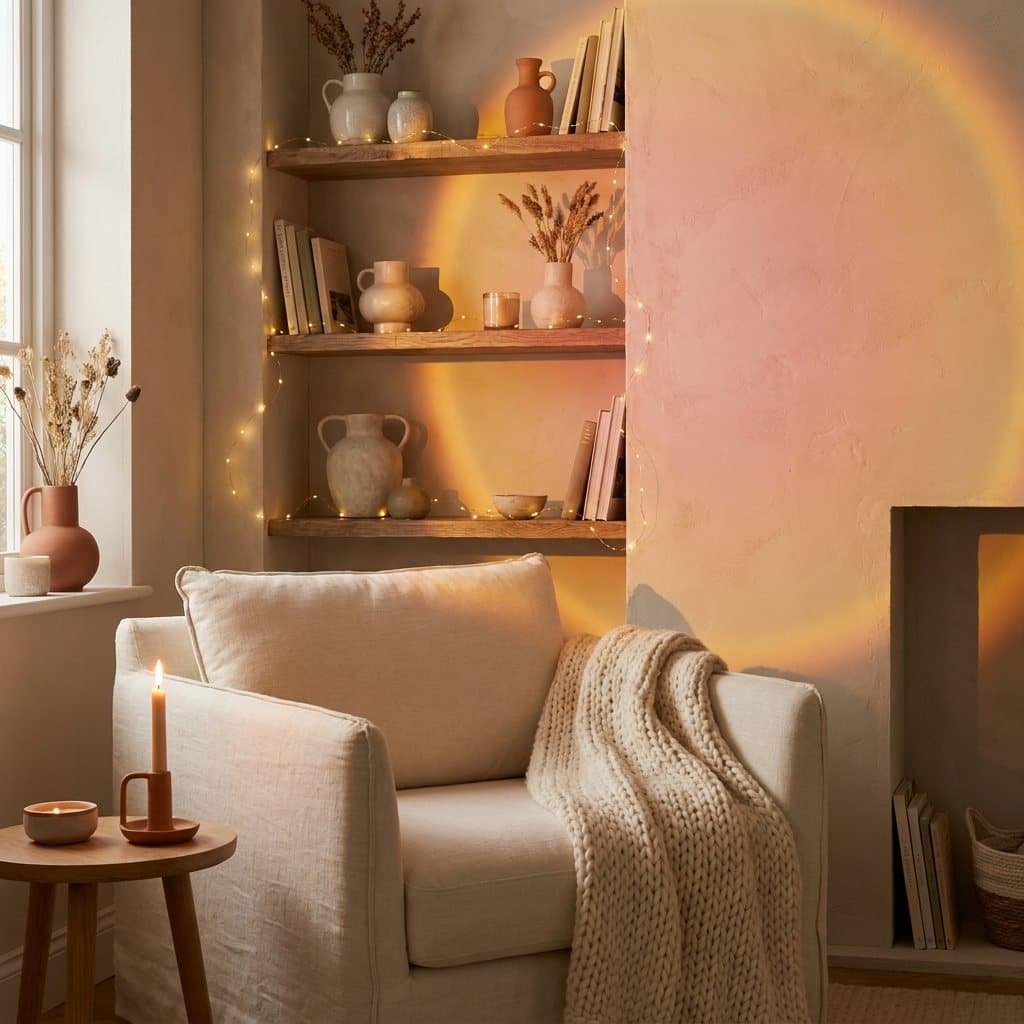
Stand in the bulb aisle and both boxes say some version of “warm white.” One says 2700K, the other 3000K, and the difference looks tiny on paper. In a bedroom at 10pm it isn't. One feels like a lamp in a room you want to be in; the other feels a little like a hotel corridor.
The short answer: use 2700K in a bedroom.Here's why, where 3000K still earns a place, and how to read the box so you buy the right one the first time.
What the K number means
The “K” is kelvin, and it describes the color of the light, not its brightness. Lower numbers are warmer and more golden; higher numbers are whiter, then bluer. A rough map:
- Around 1800–2200K: candlelight and amber glow.
- 2700K: the warm white of an old incandescent bulb — the color most people picture when they think of a cozy lamp.
- 3000K: still warm, but cleaner and a touch crisper.
- 4000K and up: neutral to cool white, the light of offices and kitchens in a showroom.
2700K vs 3000K in a bedroom
2700Khas more gold in it. Skin looks warmer, wood looks richer, and the room feels like evening. It's the better choice for bedside lamps, floor lamps, and anything you'll have on in the hour before sleep.
3000K reads as fresher and a little more awake. It shows colors more accurately, which is why it suits a closet, a mirror where you do makeup, or a desk in the corner of the bedroom. As the main light in a room you wind down in, it tends to feel slightly cool.
The one rule that matters more than the number: don't mix them in the same view. A 3000K lamp next to a 2700K lamp makes the cooler one look almost blue. Pick one color temperature for the lamps you see together, and keep the crisper bulb for the task light that lives on its own.
Go warmer still for the last hour
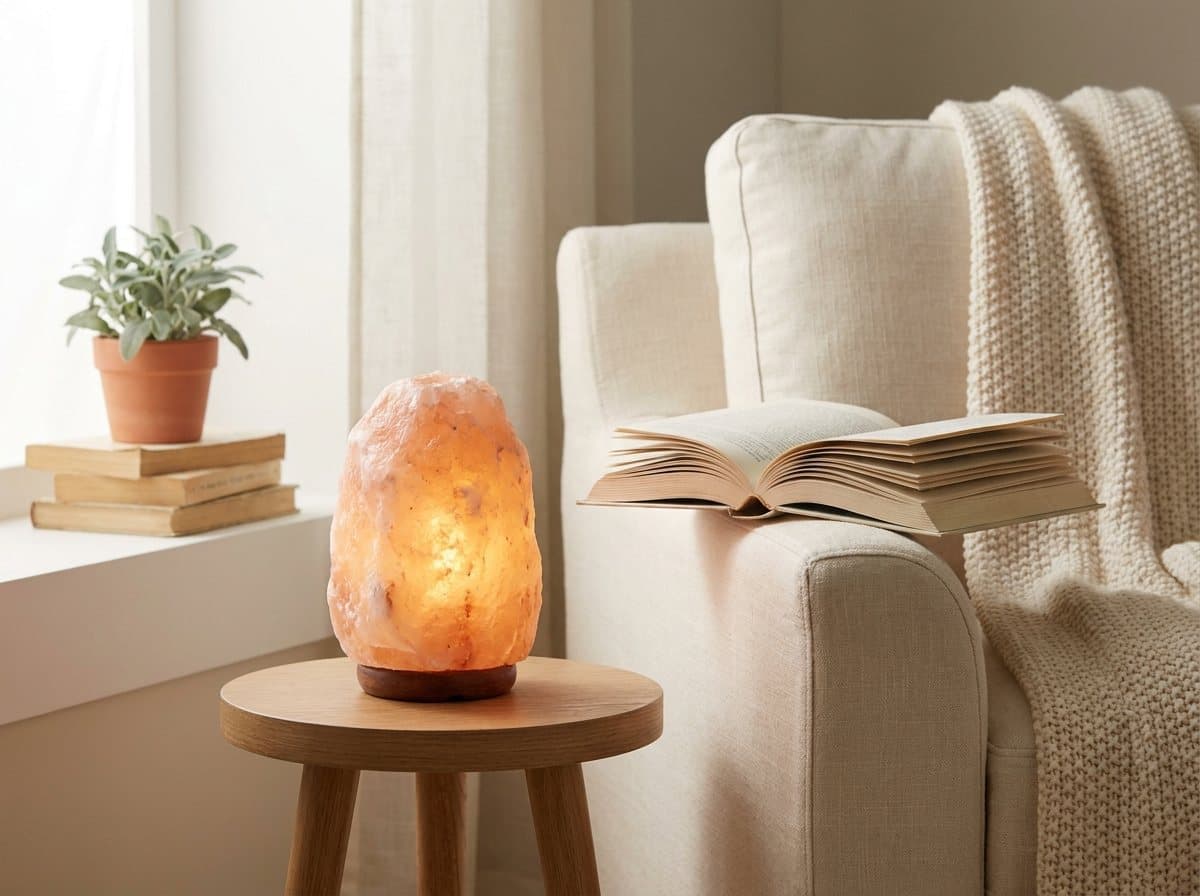
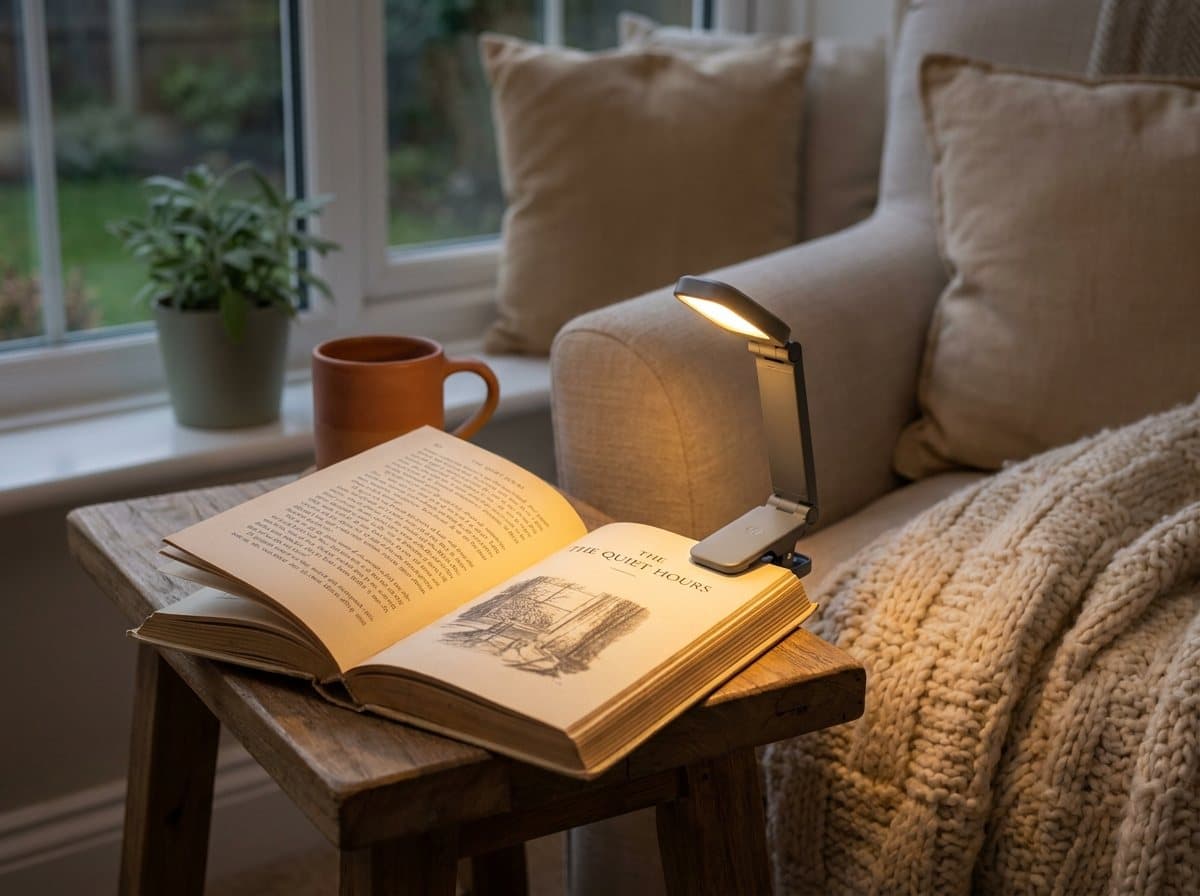
For the very end of the evening, add one source below 2700K — the amber, candle-colored range. A salt lamp glows right in that range and dims nearly to nothing. A clip-on book light with an amber setting lights your page without lighting the room. And a candle warmer lamp gives you a low pool of golden light (plus scent) with no flame on the nightstand.
Lighting
Rechargeable Clip-On Book Light
Clips right onto the page and dims to a warm amber glow — the one thing that turns an ignored corner into a reading nook.
How to read the box
In the US, the Lighting Facts label on the back of the box lists the light appearanceas a kelvin number on a warm-to-cool scale. Read that number rather than the name on the front: “soft white” usually means 2700K, but “warm white” and “bright white” can mean anything from 2700K to 4000K depending on the brand. Three more things worth checking:
- Brightness is lumens, not watts. Around 450 lumens (the old 40-watt bulb) is plenty for a bedside lamp; 800 lumens (the old 60-watt) suits a main floor lamp.
- Dimmable, if you have a dimmer. A non-dimmable bulb on a dimmer flickers and hums.
- CRI 90 or higherif it's listed. It means colors and skin tones look natural instead of slightly gray.
We don't list bulbs ourselves — any reputable brand with the right numbers on the label will do the job.
Putting it together
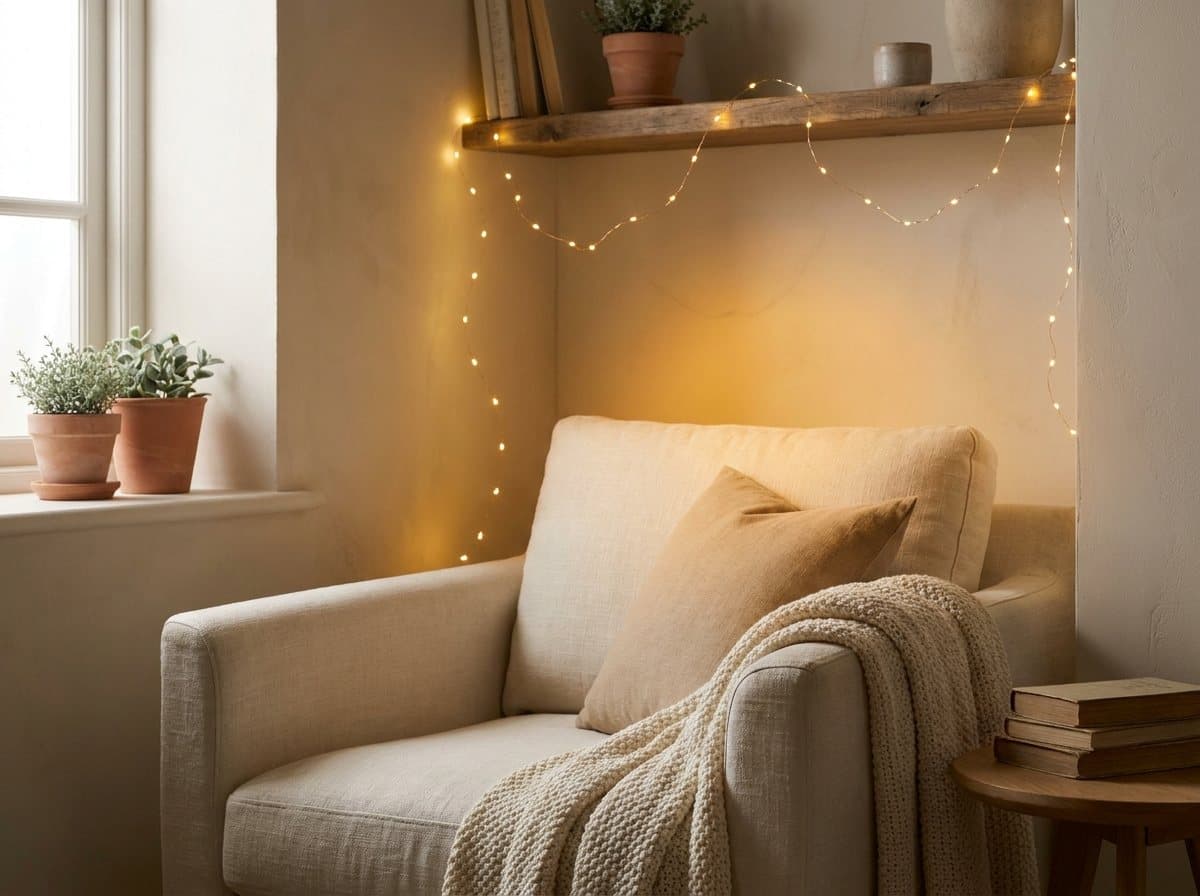
A cozy bedroom setup, start to finish: 2700K dimmable bulbs in the bedside and floor lamps, one amber source for the last hour, and a string of warm-white fairy lights along the headboard or curtain rod if you want a soft background glow. Keep 3000K for the closet or the mirror. Leave the ceiling light off.
Lighting a room with no overhead fixture at all? See how to light a room without a ceiling light, or browse the rest of the cozy lighting finds.