Plenty of apartments come without an overhead fixture at all — just a switched outlet and a hopeful landlord. And plenty more have one you never want to turn on, because it lights the room like a waiting room. Either way, the answer is the same: light the room from the sides and the middle, not the top, with three or four small sources instead of one big one.
It sounds like more work. It isn't — and the room ends up warmer, deeper, and far kinder at 9pm than any ceiling light could make it.
Why one big light feels cold
A single source overhead flattens everything. It throws shadows straight down, under eyes and under furniture, and leaves the corners dim, so the room reads as one bright puddle in the middle. Lamps at different heights do the opposite: they push light into the edges, the walls glow, and the room feels bigger and calmer at the same time.
The rule: three heights, three jobs
Think in layers rather than fixtures. Most rooms feel finished with one light at each of these heights:
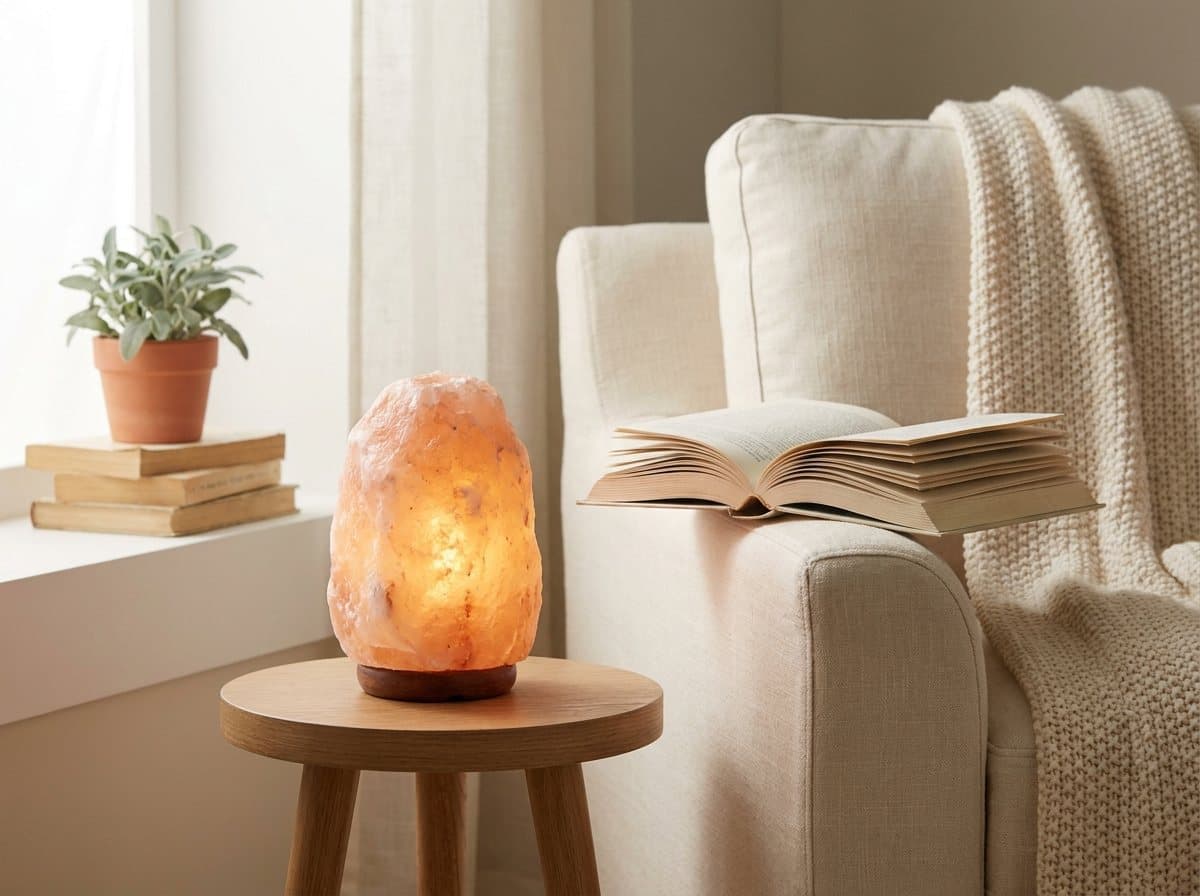
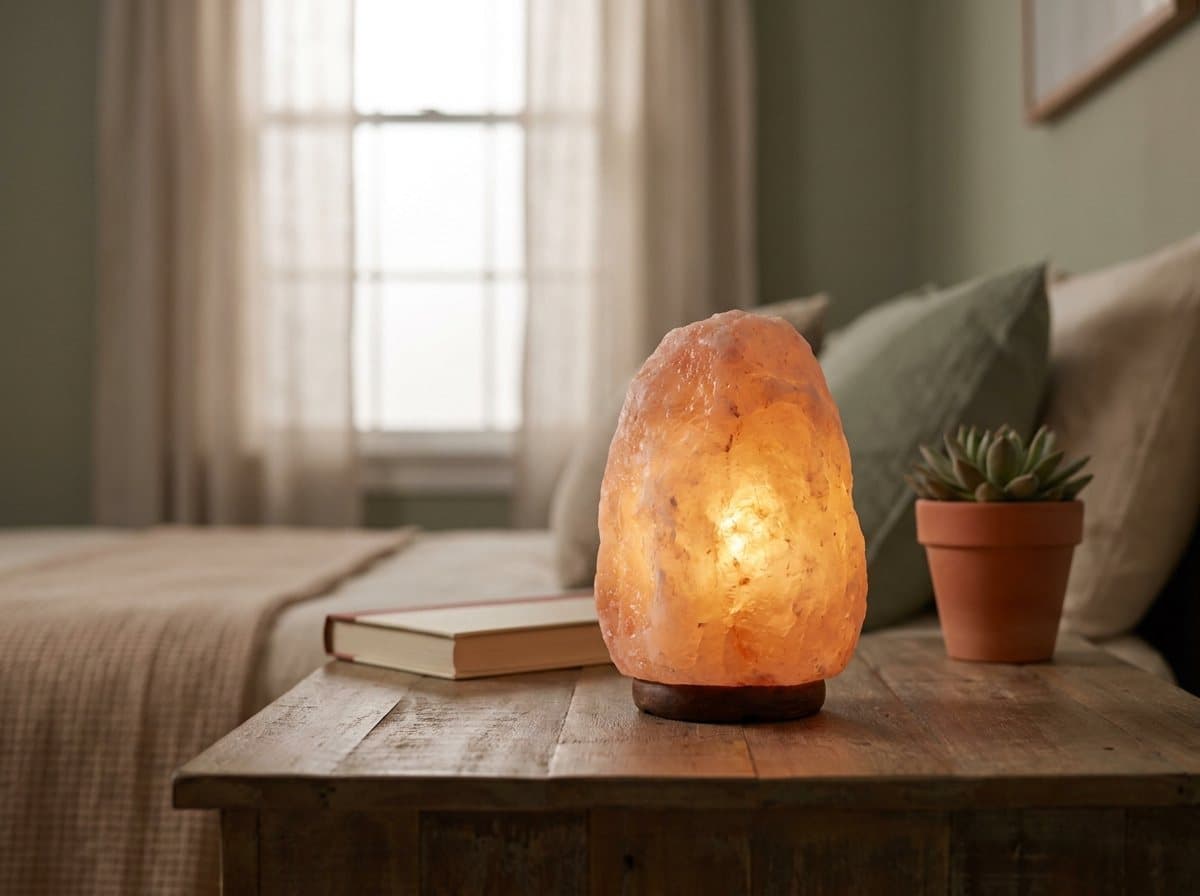
- Low — the glow. Something warm near the floor or on a low table, where it lights the wall behind it. A Himalayan salt lamp is made for this: a dim, amber pool with a dimmer, so you can turn it down to almost nothing late at night.
- Middle — the room light. A table or floor lamp at about seated eye level, beside the sofa or bed. This is the one that lets you see the room, so give it a shade that hides the bulb.
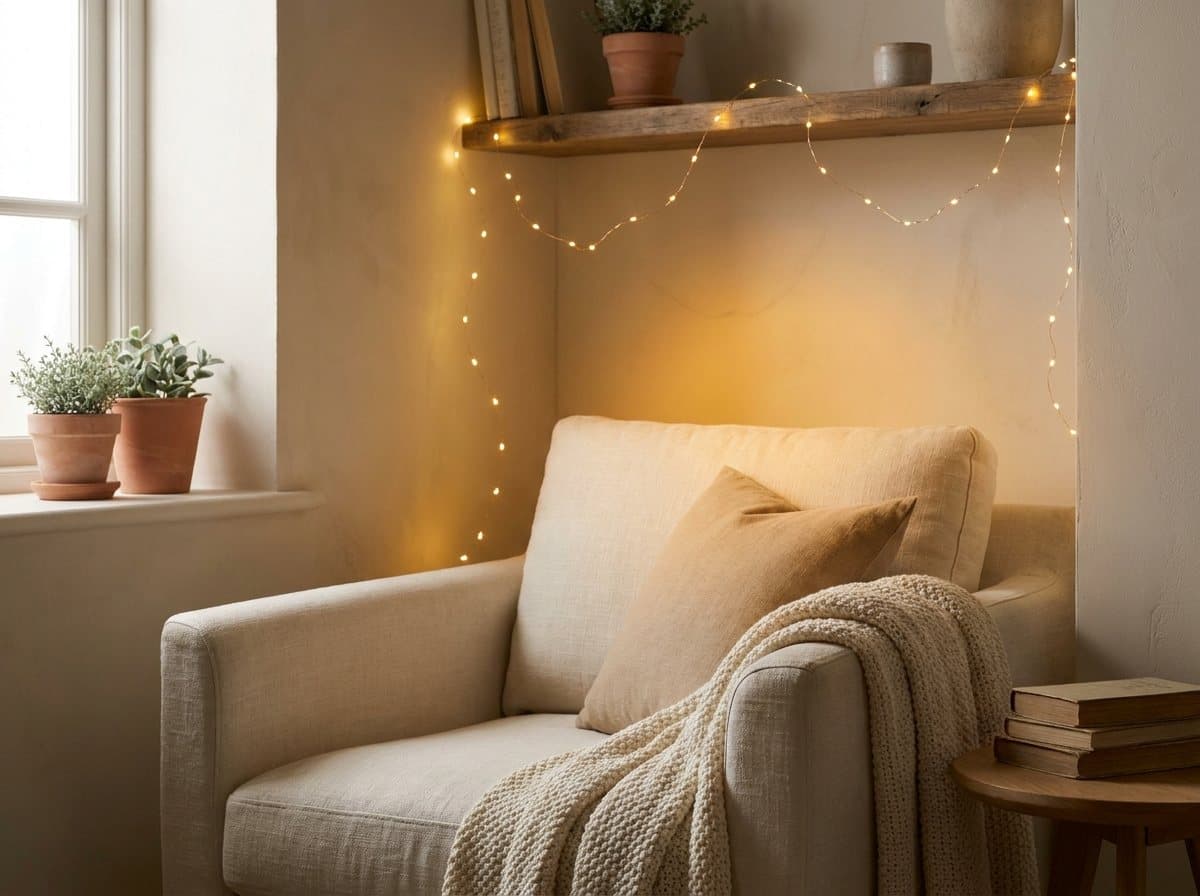
- High — the wash. A soft line of light up on a shelf, a curtain rod, or the top of a bookcase. Warm-white fairy lights do this better than anything at the price: they light the top of the wall, which is exactly what a ceiling light was pretending to do.
Lighting
Himalayan Salt Lamp
A low amber glow with a little weight and ritual to it — and a dimmer switch.
Where to put each lamp
Placement matters more than the lamp itself. A few rules that work in almost any room:
- Start with the corners. A dark corner makes a room feel smaller. Put your first lamp in the corner opposite the door, so the room glows the moment you walk in.
- Light the walls, not the people.Light bouncing off a pale wall is softer than light pointed at a face. Pull lamps a hand's width from the wall and let it do the diffusing.
- Make a triangle. Three sources spread around the room — one each side and one across — give even light without a single hot spot.
- Hide the cords. Run them behind furniture or along the baseboard with removable clips. Visible cords make even good lighting look temporary.
The close-up layer, for evenings
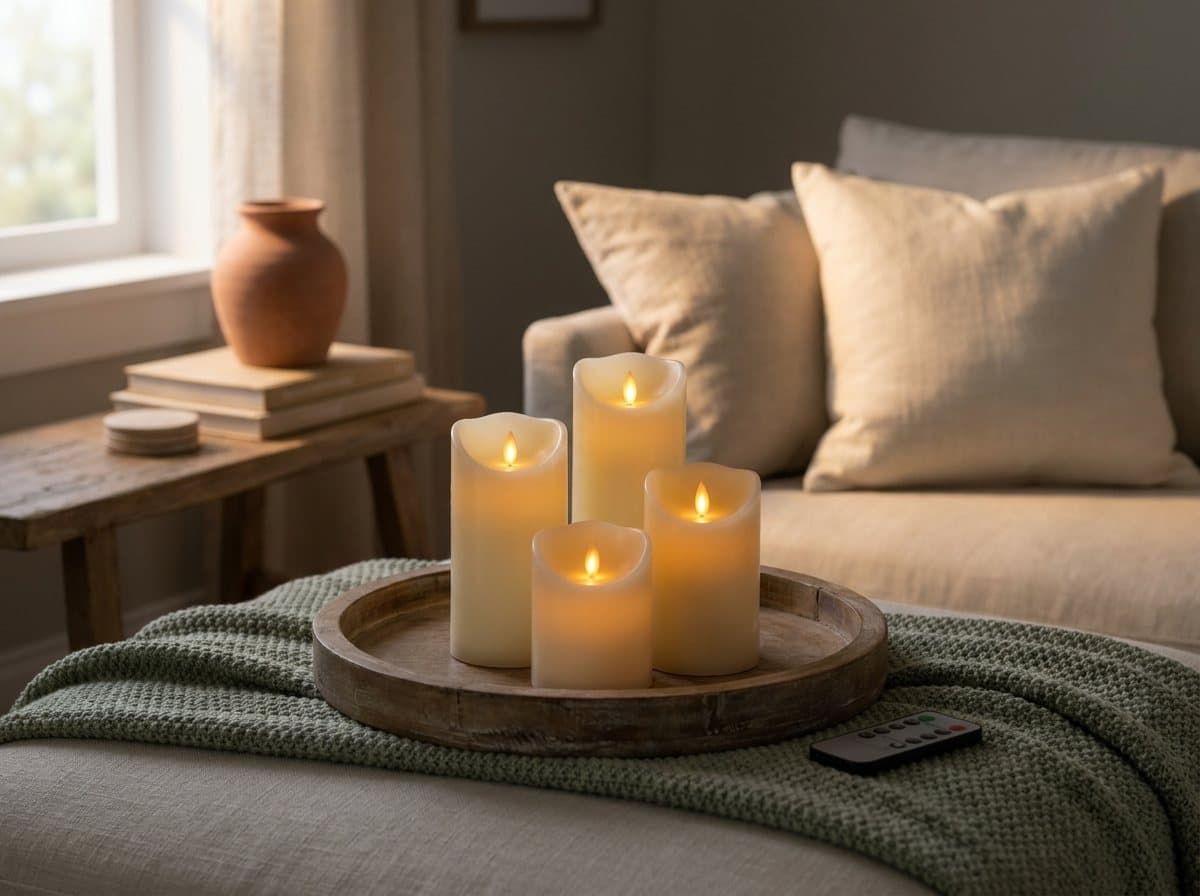
Once the room light is sorted, add one small, close light for the part of the evening when you're sitting still. A cluster of flameless flickering candles on a tray gives you candlelight on a timer, with no flame to watch. If you read, a clip-on book light dims to a warm amber and lights the page rather than the room — so the rest of the lamps can go down low.
Lighting
Flameless Flickering Candles
Real-wax pillars that flicker like the real thing — zero fire anxiety. Remote + 24-hr timer.
Pick warm bulbs, every time
All of this falls apart with the wrong bulb. Look for 2700Kon the box for living rooms and bedrooms — it's the warm, slightly golden white that feels like evening. Cooler bulbs (4000K and up) are made for garages and offices. If you're choosing between two warm options, our 2700K vs 3000K guide walks through it room by room.
A ten-minute version for tonight
No new lamps yet? Turn the overhead light off and move what you already own: one lamp into the darkest corner, one beside where you sit, and anything small and warm onto a shelf. Swap any cool bulbs for warm ones if you have them. That's most of the effect, and it costs nothing.
For more ideas, browse the cozy lighting finds, or see the five lighting finds under $30 that warm a room the fastest.